.avif)
Summary: Does the P-Shot Increase Penis Size?
The P-Shot (Priapus Shot) is a platelet-rich plasma (PRP) injection designed to improve erectile function and penile tissue health. While a 2021 randomized controlled trial demonstrated improvements in erectile function scores[1], current clinical evidence does not reliably demonstrate permanent increases in penile length or girth. Results are typically modest, variable between individuals, and may diminish over time. The P-Shot is best understood as a regenerative therapy for erectile quality — not a structural enlargement procedure.
What Is the P-Shot?
The P-Shot (Priapus Shot) is a non-surgical procedure that involves injecting platelet-rich plasma (PRP) derived from a patient’s own blood into the penis. PRP is a concentrated component of blood that contains growth factors associated with tissue repair, blood vessel formation (angiogenesis), and cellular regeneration.[2]
PRP therapy has been studied across multiple medical specialties, including orthopedics, dermatology, and wound healing. In urology, it has been explored primarily as a treatment for erectile dysfunction (ED) rather than as a penile enlargement method.
Key Clinical Distinction: The P-Shot is classified as a biologic regenerative therapy aimed at improving tissue function and blood flow. It is not designed or FDA-approved as a structural penile enlargement procedure. Patients considering the P-Shot specifically for size enhancement should understand this distinction before proceeding.
Does the P-Shot Increase Penis Size?
What the Evidence Shows
The most rigorous evidence available — a 2021 double-blind, randomized, placebo-controlled trial by Poulios et al. — evaluated PRP injections for mild to moderate erectile dysfunction in 60 men.[1] The study found statistically significant improvements in erectile function scores (IIEF-EF) at 1, 3, and 6 months. However, penile size measurements (length or girth) were not a primary or secondary outcome, and structural enlargement was not demonstrated.
A separate pilot study on the P-Long Protocol — which combined PRP injections with traction devices, vacuum erection devices, and nitric oxide supplements — reported modest gains of approximately 0.81 inches in erect length and 0.47 inches in girth over six months.[3] Critically, this protocol used multiple interventions simultaneously, making it impossible to attribute any size changes to PRP injections alone.
What Patients May Notice
Some patients report a sense of increased fullness or size after the P-Shot. In most cases, this is likely explained by:
- Temporary injection volume. The PRP solution itself adds short-term fluid volume at the injection site.
- Improved erection quality. Better blood flow and firmer erections can create the subjective perception of increased size without actual structural change.
These observations are generally subjective. Objective, reproducible evidence of permanent penile enlargement from PRP injections alone remains absent from the published literature.
What Does the Clinical Research Say?
The following table summarizes the current state of evidence for PRP-based penile injections across key outcomes:
A 2022 comprehensive review published in Frontiers in Reproductive Health concluded that while PRP represents a promising area of research for erectile dysfunction, larger controlled studies with longer follow-up periods are still needed to establish standard treatment protocols.[2]
How the P-Shot Procedure Works
The P-Shot follows a standardized PRP preparation and injection process, typically completed in an outpatient setting in under one hour:
- Blood Draw. A small sample of blood (typically 30–60 mL) is drawn from the patient’s arm, similar to a routine blood test.
- PRP Isolation. The blood is placed in a centrifuge, which separates the platelet-rich plasma from other blood components.
- Local Anesthesia. A topical numbing cream or local anesthetic is applied to the penis to minimize discomfort.
- PRP Injection. The concentrated PRP is injected into targeted areas of the penile shaft and/or corpora cavernosa using a fine needle (4–5 injection sites).
- Post-Procedure. Some providers recommend use of a vacuum erection device (VED) following treatment. Most patients return to normal activities immediately.
The Poulios et al. trial used two sessions one month apart.[1]
Risks and Potential Side Effects
Because PRP is autologous — derived from the patient’s own blood — the risk of allergic reaction or immune rejection is minimal. Potential risks include:
- Injection site pain or tenderness — typically mild, resolving within 24–48 hours
- Swelling or bruising — common and generally self-limiting
- Infection — rare but possible with any percutaneous injection
- Temporary discoloration — may occur at the injection site
- Scar tissue formation — a rare complication, particularly if technique is suboptimal
No serious adverse events were reported in published trials.[1][4] Patients should verify that their provider has appropriate urological training and operates under sterile clinical conditions.
Important: The P-Shot is not FDA-approved for penile enlargement. While individual PRP processing devices may be FDA-cleared, the procedure itself remains an off-label application of PRP technology.
Who Is a Candidate for the P-Shot?
The P-Shot May Be Appropriate For
- Men with mild to moderate erectile dysfunction seeking non-surgical, drug-free options
- Patients interested in regenerative therapies as a complement to existing ED treatments
- Men who have not responded adequately to PDE5 inhibitors (sildenafil, tadalafil)
- Patients with Peyronie’s disease seeking conservative treatment for penile curvature
The P-Shot May Not Be Appropriate For
- Patients whose primary goal is significant or permanent penile size increase
- Individuals with bleeding disorders, platelet dysfunction, or active infections
- Patients with unrealistic expectations about the extent or permanence of results
- Men with severe ED that may require surgical intervention such as penile implant surgery
A thorough consultation — including medical history, physical examination, and an honest discussion of goals — is essential before proceeding with any penile enhancement procedure.
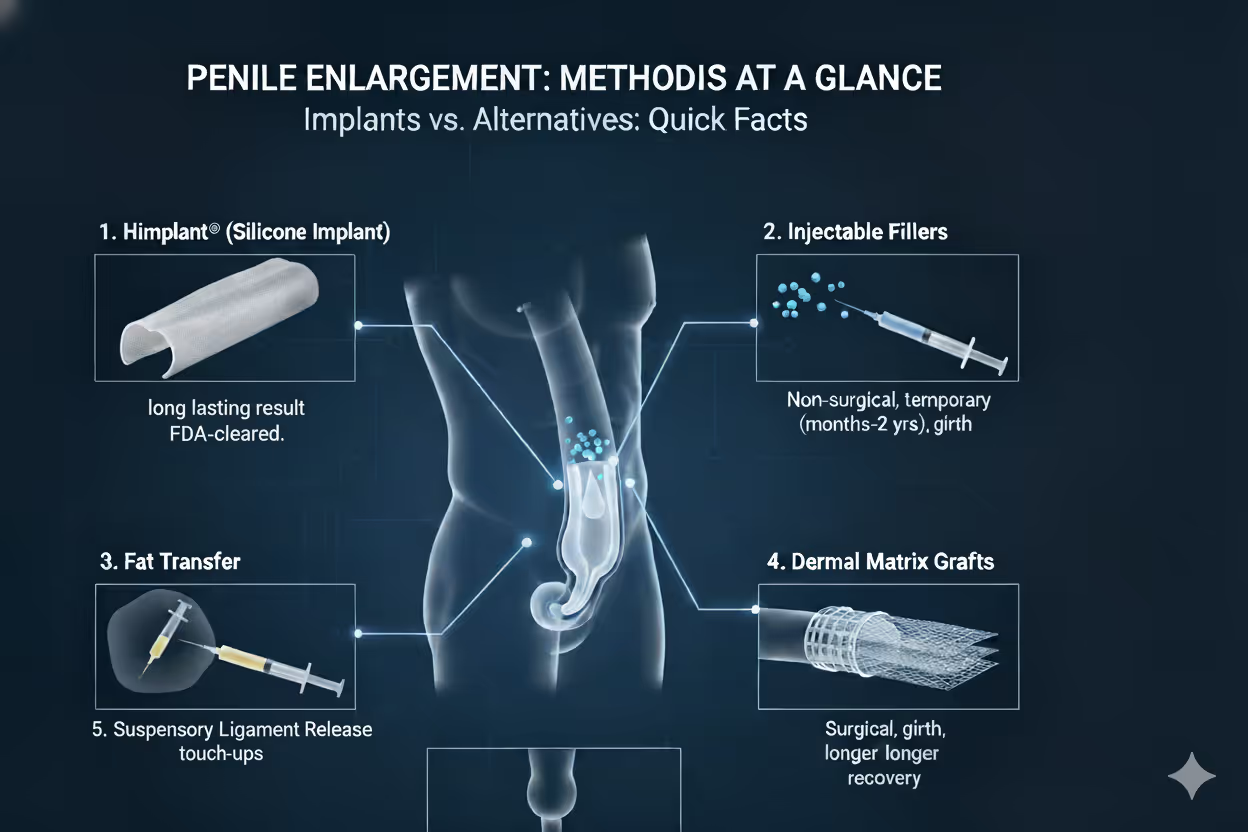
P-Shot vs. Other Penile Enhancement Methods
The following comparison outlines the most commonly discussed penile enhancement approaches:
Limitations of the P-Shot
Despite growing interest in PRP for sexual health, several factors limit the reliability of P-Shot outcomes:
- No standardized treatment protocols. PRP preparation methods, platelet concentrations, injection volumes, and session numbers vary widely between providers.
- Variability in PRP quality. Different centrifuge systems produce PRP with different platelet counts and growth factor concentrations.[2]
- Small sample sizes. The highest-quality trial involved only 60 participants.[1]
- Limited long-term data. Follow-up in published studies extends to a maximum of 6 months.
- Individual biological variation. Patient age, baseline health, smoking status, and severity of ED all influence treatment response.
These limitations underscore the importance of consulting a board-certified urologist or sexual health specialist when considering PRP-based penile treatments.
When to Explore Other Options
Men whose primary objectives include visible penile size increase, structural changes, or long-term/permanent results may find that the P-Shot does not align with those goals based on current evidence.
Alternative treatment categories to discuss with a qualified surgeon include penile girth enhancement using injectable dermal fillers, surgical length enhancement via suspensory ligament release, penile implant surgery for men with concurrent erectile dysfunction, and autologous fat transfer for girth augmentation.
At Himplant we provide individualized consultations that cover the full range of evidence-based options — including a candid assessment of which patients may not benefit from any particular procedure.
Frequently Asked Questions
Does the P-Shot permanently increase penis size?
Current clinical evidence does not support permanent increases in penile length or girth from PRP injections. The highest-quality trial (Poulios et al., 2021) measured erectile function improvements but did not demonstrate structural size changes.[1]
How long do P-Shot results last?
Benefits for erectile function have been observed up to 6 months post-treatment, with effects gradually diminishing.[4] Duration varies by individual. Some providers recommend maintenance sessions.
Is the P-Shot FDA approved for penis enlargement?
No. While some PRP processing devices are FDA-cleared, the P-Shot procedure itself is not FDA-approved for penile enlargement. It is considered an off-label application of PRP technology.
Is the P-Shot procedure painful?
Local anesthesia is applied before the procedure. Most patients report only mild discomfort during injection and minor soreness lasting 24–48 hours afterward.
How many P-Shot sessions are needed?
There is no standardized protocol. Some providers recommend 2–3 sessions spaced one month apart. The Poulios et al. trial used two sessions.[1]
How much does the P-Shot cost?
P-Shot treatments typically range from $1,000–$2,000 per session. Costs vary by clinic and location. Health insurance does not cover PRP injections for penile enhancement.
Can the P-Shot be combined with other treatments?
Some providers combine PRP with low-intensity shockwave therapy (Li-ESWT), traction devices, or vacuum erection devices. One pilot study reported improved outcomes with combined PRP and shockwave therapy.[5] Combined protocols have limited evidence and are not yet standardized.
References & Sources
- Poulios E, Mykoniatis I, Pyrgidis N, et al. Platelet-Rich Plasma (PRP) Improves Erectile Function: A Double-Blind, Randomized, Placebo-Controlled Clinical Trial. J Sex Med. 2021;18(5):926-935. PubMed: 33906807
- Matz EL, Pearlman AM, Terlecki RP. Erectile Dysfunction: Is Platelet-Rich Plasma the New Frontier for Treatment? Front Reprod Health. 2022;4:977909. PMC: 9580815
- Runels C, et al. A Pilot Study of a Novel PRP Protocol to Increase Penile Length, Girth, and Function. J Sex Med. 2024;21(Supplement_1). Oxford Academic
- Tian Y, et al. Pilot Study of Intra-Cavernous Injections of PRP in Vascular Erectile Dysfunction. Prog Urol. 2022;32(8-9):562-568. PubMed: 35697553
- Zasieda YI. Combined Use of PRP and Low-Intensity Pulsed Ultrasound (LIPUS) for Treatment of Vascular ED. Conference abstract; cited in PMC review (Ref. 2).
- Cleveland Clinic. Priapus Shot (P-Shot): PRP, How It Works, Benefits & Risks. Updated October 2025. clevelandclinic.org
Medical Disclaimer: This content is for informational and educational purposes only and does not constitute medical advice, diagnosis, or treatment. Individual results vary. All medical decisions must be made in consultation with a qualified healthcare provider. The P-Shot is not FDA-approved for penile enlargement. Final treatment recommendations are determined by the treating physician following individualized evaluation.
Ready to Experience a Bigger and Better You?
Meet the world's first FDA-cleared penile implant for cosmetic male enhancement. Contact us today to see if you're eligible for the procedure.

.avif)